Latest News

ESG Reporting Digitization Standard Released: Why Companies Need Better Data Management

ESG Reporting Digitization Standards Released: Why Companies Need Better Data Management

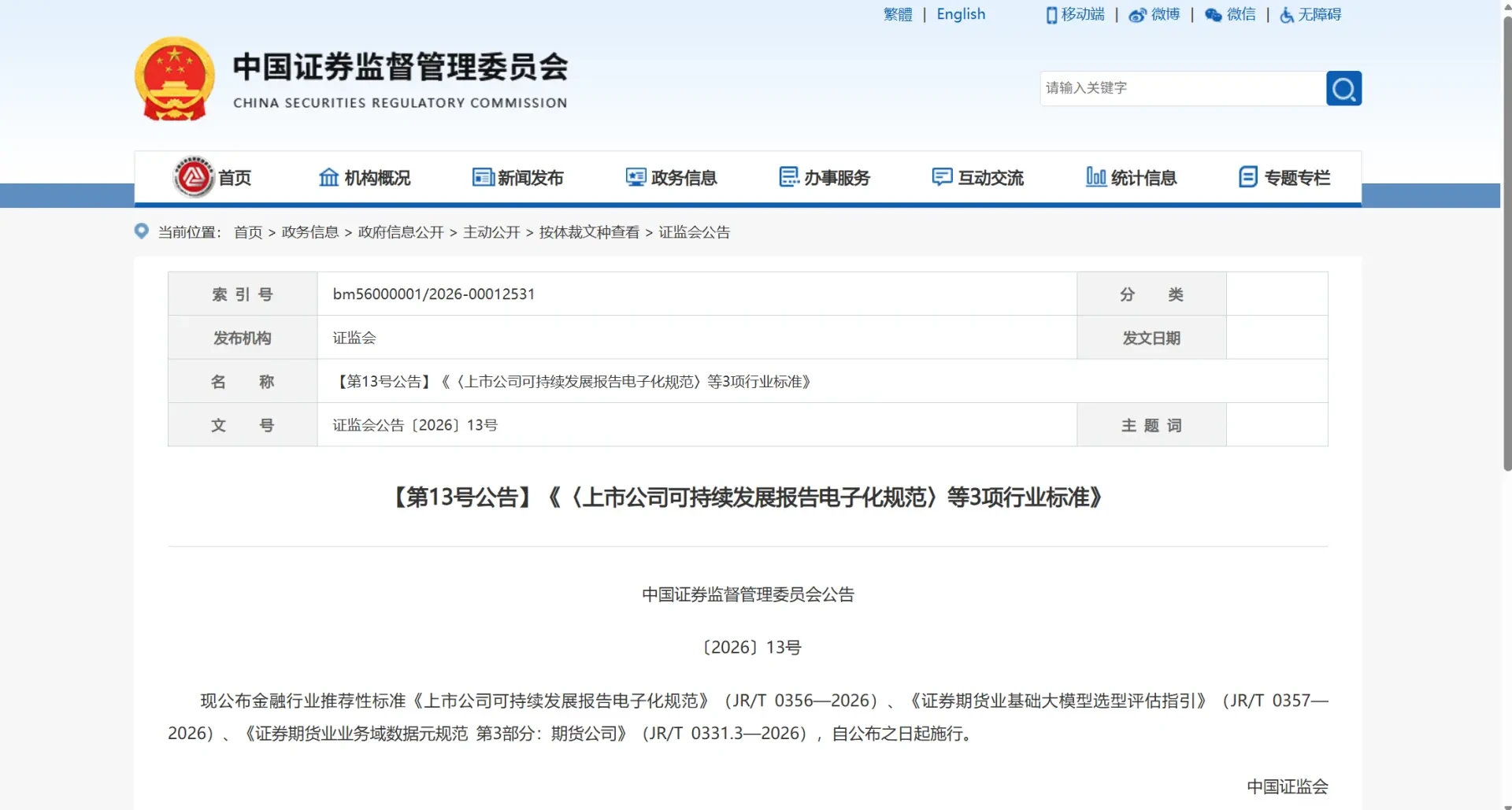
On 2026/10/26, the China Securities Regulatory Commission (CSRC) released the recommended financial industry standard "Electronic Specification for Sustainability Reporting of Listed Companies" (JR/T 0356—2026), establishing guidelines for the classification, coding, and electronic processing of sustainability reports. Many companies are accustomed to publishing ESG reports in PDF format. So, what changes does this new standard bring? The key is not simply converting reports into digital formats, but enabling critical information to be expressed in a standardized way that machines can read. This also presents new challenges for corporate ESG data management.

Read more
The first year of mandatory ESG reporting concludes; preparations for the 2026 reporting cycle are now underway.

The first year of mandatory ESG reporting has concluded. Preparation for the 2026 disclosure cycle is now underway.

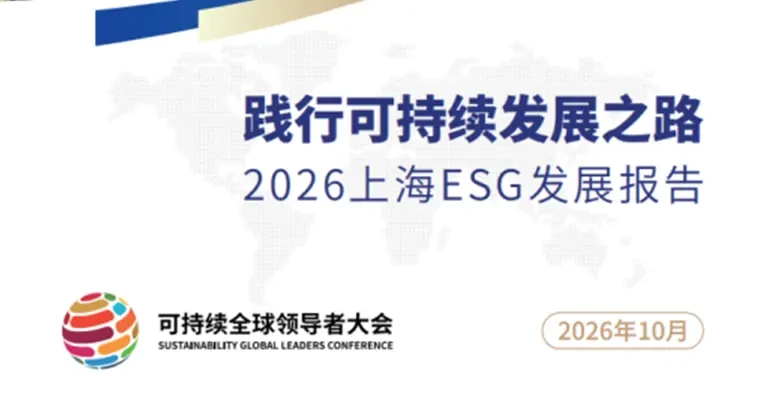
According to the "2026 Shanghai ESG Development Report" compiled by the China Association for Listed Companies: As of 30, 430 A-share entities required to disclose have completed their first sustainability report. By 30, a total of 2718 companies across the market had disclosed, representing a disclosure rate of 49.8%, including 2288 non-mandatory entities. Regulators have also clearly stated that they will steadily expand coverage based on policy assessments and corporate practice capabilities, without blindly pursuing the number of disclosing companies.

Read more
Ministry of Finance seeks comments on climate guidelines for 9 major industries; "Industry Manual" on climate disclosure released

Ministry of Finance seeks public comments on climate guidelines for 9 major industries; "Industry Handbook" on climate disclosure released

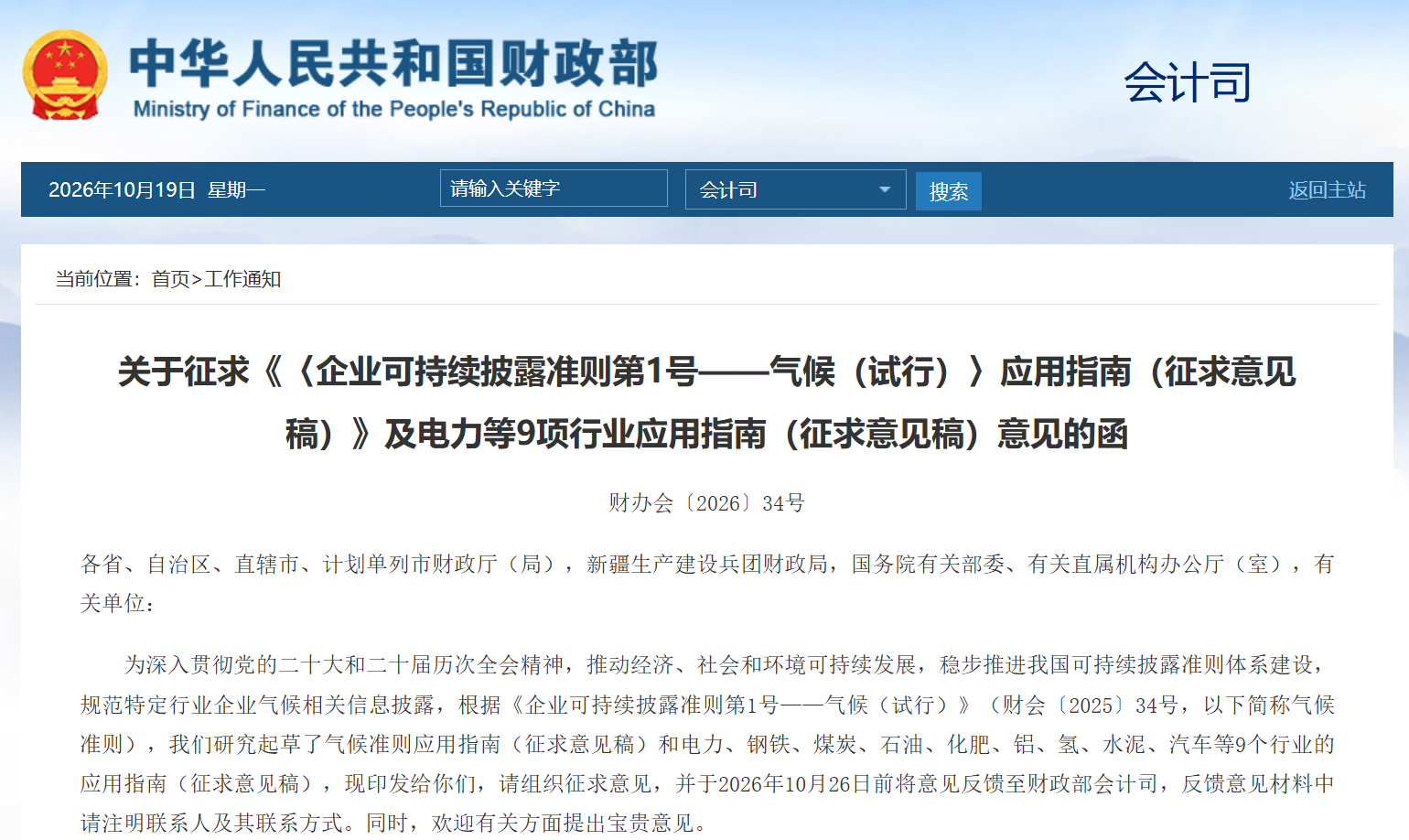
On 9 28, the Ministry of Finance issued "Letter on Soliciting Opinions on the Draft Application Guidelines for 'Enterprise Sustainability Disclosure Standard No. 1 — Climate (Trial)' and Industry-Specific Application Guidelines for Electricity and Other 9 Industries" (Cai Ban Hui [Year 2026] Document No. 34), advancing climate disclosure from a general framework to industry-level implementation. For key emission enterprises in nine sectors—electricity, steel, coal, oil, fertilizer, aluminum, hydrogen, cement, and automotive—this establishes a clear roadmap for what to disclose and how to calculate it, while raising the compliance baseline.

Read more
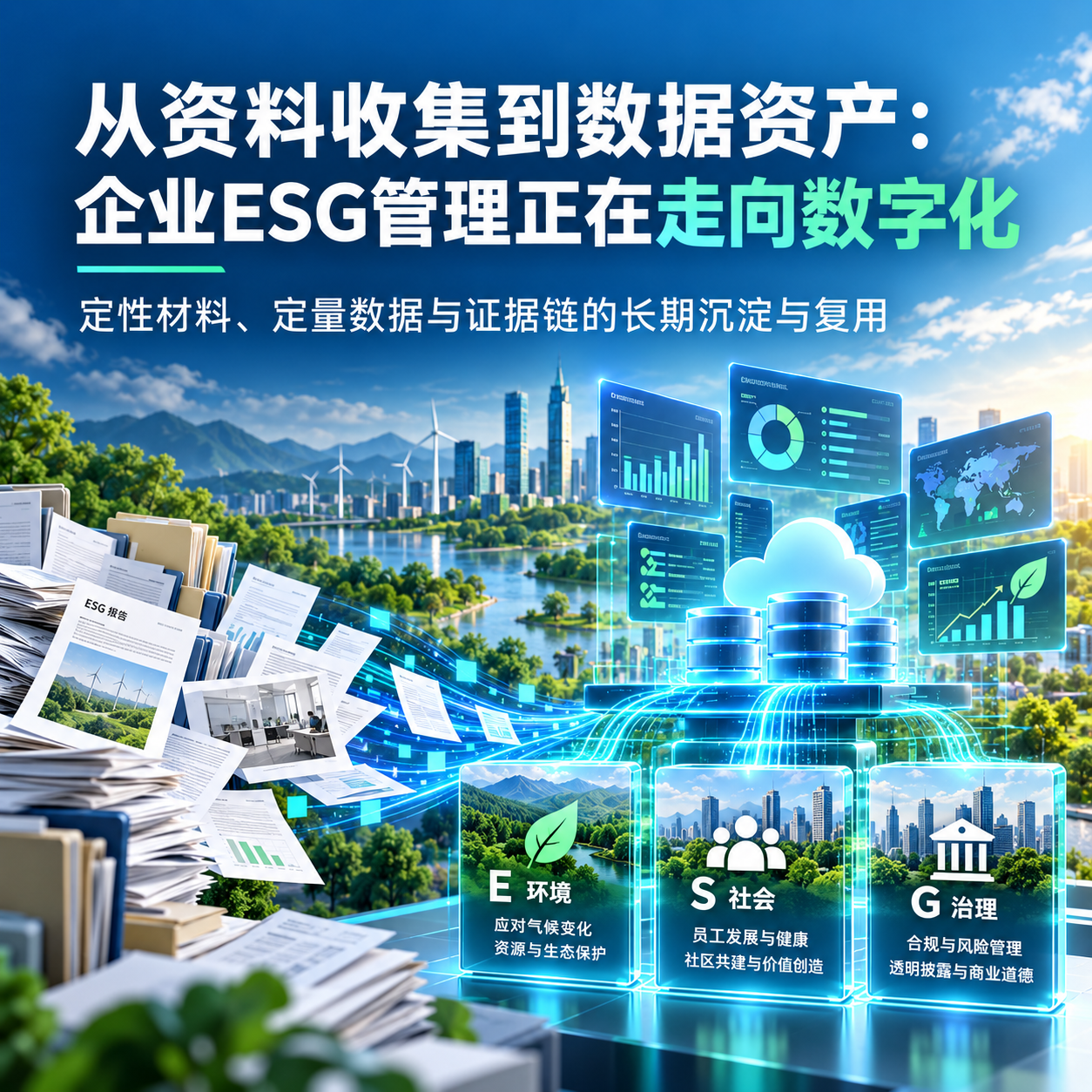
From Data Collection to Digital Assets: Enterprise ESG Management Goes Digital

From Data Collection to Digital Assets: Enterprise ESG Management Goes Digital

As ESG disclosure becomes routine, more companies have been publishing ESG reports, participating in ratings, responding to client questionnaires, and carrying out specialized initiatives such as carbon management and sustainable supply chain management for multiple consecutive years. Yet during annual report preparation, many still face recurring challenges: data scattered across departments, historical records requiring re-verification, outdated policy documents replacing last year's versions, and inconsistent metric definitions needing repeated clarification across different contexts. This points to a deeper issue beyond mere "data collection efficiency." It is a critical management challenge for enterprises: Are the ESG insights accumulated through significant annual efforts truly being captured and institutionalized?

Read more
How should enterprises approach ESG in the AI era?

How Should Enterprises Approach ESG in the AI Era?

Today, corporate ESG efforts face dual pressures. On one side, disclosure requirements and supply chain audits are being implemented, making carbon emissions data, labor compliance, customer privacy, and corporate governance increasingly critical. On the other, AI is accelerating integration into business processes—boosting efficiency while introducing new challenges like high investment costs, energy consumption, data security, and tech ethics. Therefore, ESG in the AI era isn't just adding an AI section to an ESG report. It requires two parallel actions: 1. **Use AI to manage ESG**: Transform environmental, social, and governance practices from post-event reporting into real-time, actionable, and closed-loop systems. 2. **Use ESG to govern AI**: Incorporate compute footprint, data sourcing, algorithmic fairness, and privacy protection into decision-making frameworks.

Read more
From Melting Glaciers to Mudslides: How Climate Change Disrupts Businesses

From Melting Glaciers to Mudslides: How Climate Change Disrupts Business

On 2026/8/26, a glacial ice-rock avalanche in Nepal triggered a disaster that traveled approximately 22 kilometers before reaching the Gyirong Port in Tibet. Official reports state the incident resulted from long-term climate change disrupting glacier stability. (Source: Information Office of the People's Government of the Tibet Autonomous Region, notification dated 2026/8/30) A disaster in a border mountain region directly halted a port. Climate systems are changing, and these shifts will impact business operations—delivery timelines, procurement costs, and logistics channels may all be affected. The question is no longer "How far is climate risk?" but "Where do we start responding?"

Read more
UK Recognizes China's Carbon Market: How Should Exporters Calculate Their Carbon Accounts?

The UK Recognizes China's Carbon Market: How Should Exporters Calculate Their Carbon Accounts?

On 2026 8, 27, HMRC published "UK CBAM: Current Eligible Carbon Pricing Mechanisms," the first official list of foreign carbon pricing mechanisms eligible for Carbon Price Relief (CPR). China's National Emissions Trading System was formally included as one of 16 Qualifying Carbon Pricing Schemes (QCPSs). This means exporters to the UK can claim CPR for covered goods if they have already incurred compliant carbon costs in China, preventing double counting of carbon across borders.

Read more
Hong Kong Market Sees New Shift: ESG Becomes a Shared Priority Before and After Listing

Hong Kong market sees new developments: ESG is now a shared priority before and after listing.

On 8 21, the Hong Kong Stock Exchange announced a temporary extension of the validity period for eligible new listing applications from 6 months to 12 months. On 8 3, the China Securities Regulatory Commission and the Hong Kong Securities and Futures Commission jointly released new measures to deepen market cooperation, explicitly calling for "a financial pilot program to promote climate-related transition plan disclosures by listed companies in both regions." One change occurred during the listing process; the other targets ongoing disclosure after listing. While these two changes are not directly causally linked, together they reflect a clear trend: as the Hong Kong market enhances financing accessibility, it continues to raise requirements for corporate governance, non-financial information disclosure, and sustainable development management capabilities.

Read more
WanCe Green Finance | Products & Solutions

WanCe Green Finance | Products & Solutions

With global regulations tightening, capital market standards rising, and supply chain entry requirements becoming stricter, ESG is no longer optional—it's essential for market access, investor confidence, and long-term competitiveness. What companies truly need isn't just a report or certification support, but a sustainable ESG management system that operates continuously and supports business decisions. WanCe Green Finance delivers three integrated solutions—Compliance Readiness, Capital Value Creation, and Operational Optimization—anchored by a unified digital platform. This empowers organizations to reduce compliance risks, enhance capital market performance, and embed ESG and carbon management directly into daily operations.

Read more
"Carbon" in the "Ecological Environment Code": Signals and Trends from an ESG Perspective

"Carbon" in the "Code on Ecological and Environmental Law": Signals and Trends from an ESG Perspective

On 2026, 8, 15, the "Environmental Protection Code of the People's Republic of China" will officially take effect. The chapter on "Climate Change Response" within the Green and Low-Carbon Development section will, for the first time, systematically establish key systems—including carbon emission trading, product carbon footprinting, and voluntary greenhouse gas emissions reductions—in national law. This article examines select provisions to outline two definitive regulatory arrangements enterprises must address in carbon management, plus one emerging trend.

Read more
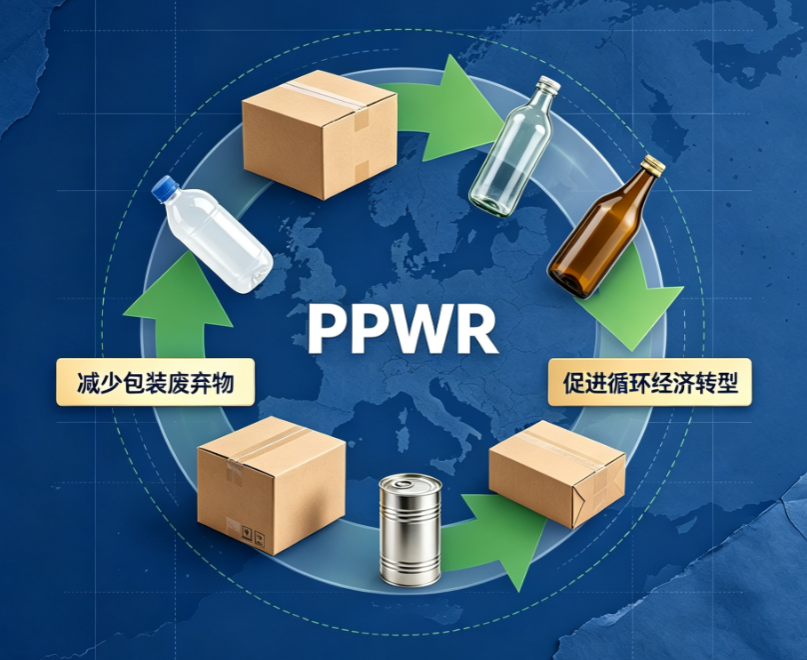
EU Packaging Regulations Take Effect: How to Turn Compliance Costs into Supply Chain Competitiveness

EU Packaging Regulations Are About to Take Full Effect: How Can Companies Turn Compliance Costs Into Supply Chain Competitiveness?

EU Packaging Regulations Take Effect Soon: How to Turn Compliance Costs into Supply Chain Competitiveness?

Read more
Climate Change Enters the 15th Five-Year Plan: The Next ESG Challenge for Businesses

Climate Change Enters the 15th Five-Year Plan: The Next ESG Challenge for Businesses

On 7 29, the Ministry of Ecology and Environment released the "National 15th Five-Year Plan for Responding to Climate Change," jointly issued by 18 ministries and agencies, including the Ministry of Ecology and Environment, Ministry of Foreign Affairs, National Development and Reform Commission, Ministry of Industry and Information Technology, Ministry of Finance, People's Bank of China, and China Securities Regulatory Commission. For businesses, this plan signals that climate issues will evolve from mere ESG disclosure topics into systemic management priorities affecting production operations, supply chain management, investor relations, and global competitiveness.

Read more
National Zero-Carbon Factory Initiative Launch: From Buying Green Power to Managing Carbon—What Hurdles Must Companies Clear?

National Zero-Carbon Factory Initiative Launches: From "Buying Green Power" to "Managing Carbon"—What Hurdles Must Companies Clear?

The Ministry of Industry and Information Technology recently issued the "Notice on Organizing the Construction of National Zero-Carbon Factories," officially launching the application process for national zero-carbon factory designation. This means that "zero-carbon factories" are no longer just aspirational goals in corporate ESG reports. They will now enter a more binding framework for construction, monitoring, and acceptance: facilities must first be selected for the construction list, achieve annual carbon reduction targets, and pass final acceptance by 2030 at the latest to officially become a national zero-carbon factory. For manufacturing enterprises and computing infrastructure, this represents both a "national-level exam" for green transformation and an opportunity to re-evaluate energy management, carbon emissions, equipment efficiency, supply chain sustainability, and digital capabilities.

Read more
Supply Chain Audit Coming Soon: How Can Enterprises Build a Sustainable Supply Chain?

How can enterprises prepare for upcoming supply chain audits to ensure effective sustainable supply chain management?

Sustainability compliance requirements in supply chains are increasingly integrated into daily business operations. Many companies face core pressure from downstream clients' specific demands, such as completing ESG assessment questionnaires, submitting carbon data and traceability documents, and undergoing on-site audits by review teams—all with clear deadlines and precise requirements. Companies with sufficient capabilities go beyond basic compliance, incorporating sustainable supply chain management into their long-term strategies to achieve positive outcomes in winning orders and building customer trust. This article outlines response strategies and practical pathways for sustainable supply chain management from two dimensions: short-term audit readiness and long-term system building.

Read more
Circular Economy to Reshape Product Design, Data & Supply Chain Management: Key Signals from the "15th Five-Year Plan for Circular Economy Development"

Circular economy will reshape product design, data management, and supply chains: What key signals does the "15th Five-Year Plan for Circular Economy Development" release?

On 2026/6/30, with State Council approval, the National Development and Reform Commission issued the "15th Five-Year Plan for Circular Economy," positioning circular economy as a key lever to ensure national resource security and support the achievement of the "dual carbon" goals. For enterprises, circular economy is no longer just a chapter in ESG reports; it has become a critical foundation shaping industrial upgrading, supply chain stability, and product competitiveness.

Read more
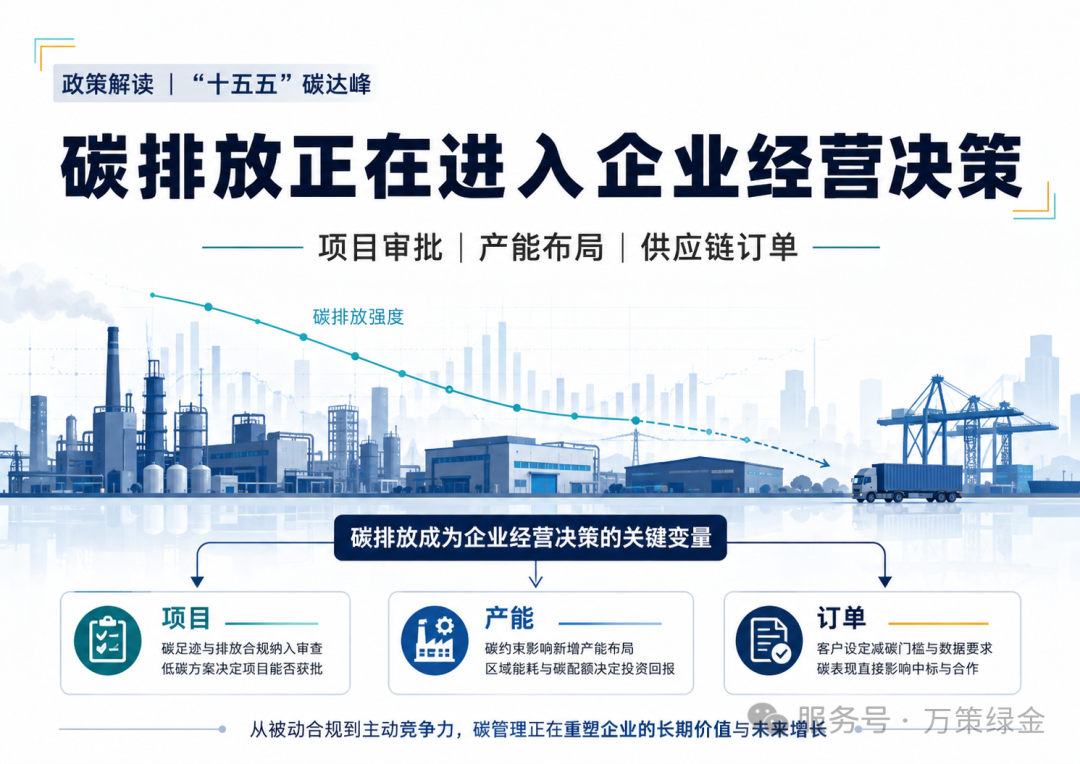
Carbon emissions will impact projects, capacity, and orders: What key signals does the "15th Five-Year Plan for Carbon Peak Action" send?

Carbon Emissions Will Impact Projects, Capacity, and Orders: Key Signals from the "15th Five-Year Plan" Carbon Peak Action Scheme

On 2026-6-29, the State Council Executive Meeting approved the "15th Five-Year Plan for Carbon Peaking," which emphasizes accelerating energy structure optimization, advancing green and low-carbon industrial transformation, and strengthening carbon emission statistics, accounting, and evaluation mechanisms. The "15th Five-Year Plan" represents the critical five-year period to achieve the carbon peaking goal set for 2030 years ago. For enterprises, carbon management will expand beyond ESG disclosure requirements to include project investment, production capacity planning, supply chain access criteria, and product competitiveness.

Read more
The SBTi 2.0 Net Zero Standard is here. Is your company ready?

SBTi has released the 2.0 edition of its Corporate Net-Zero Standard. Is your business ready?

According to official statistics from the Science Based Targets initiative (SBTi), 13762 companies worldwide have formally joined and set or committed to science-based targets. Among them, 11389 companies' reduction targets have been officially validated, and 2633 companies have explicitly set long-term net-zero targets. On 6 11, 2026, SBTi officially released the highly anticipated "Corporate Net-Zero Standard Version V2.0". As the most significant and impactful revision since the first version launched in 2021, the new standard will take effect on 2 1, 2027.

Read more